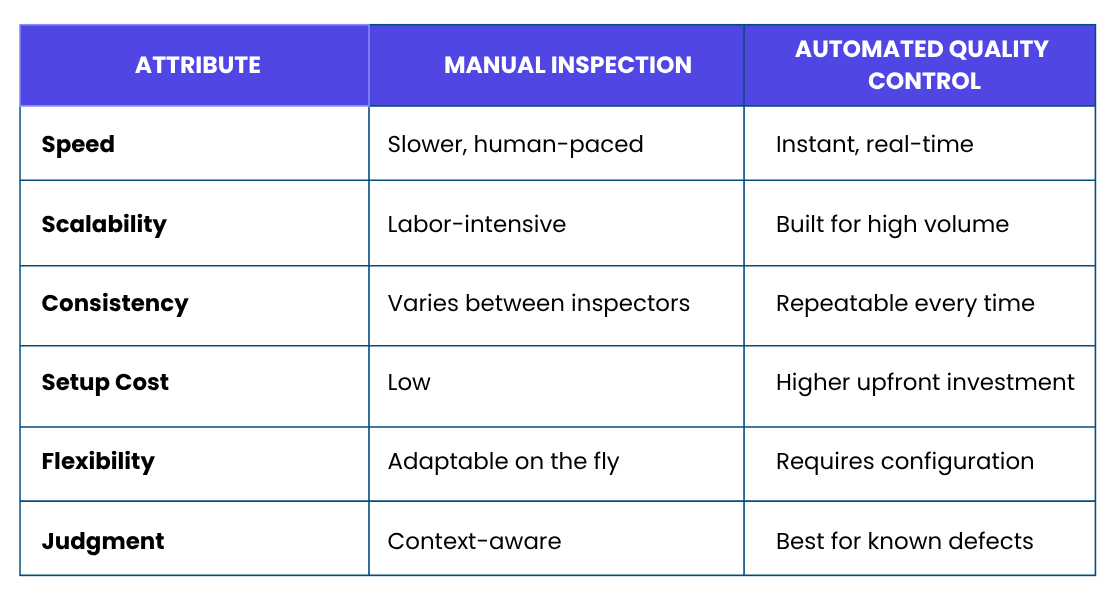
The Problem: Manual Inspection Doesn’t Scale
On fast-moving assembly lines, even the best human inspectors struggle to consistently detect:
- Micro-scratches and surface defects
- Smudges or polish inconsistencies
- Subtle cosmetic imperfections
These defects require high precision, repeatability, and speed — something traditional processes simply can’t sustain at scale.
The result:
- Inconsistent quality outcomes
- Higher defect escape rates
- Increased downstream costs
- Limited visibility into defect patterns
The PRR Approach: Vision AI + Practical Deployment
Rather than treating this as a long, experimental AI initiative, we focused on delivering a production-grade system through a tightly scoped, fast-moving POC.
We designed a Vision AI Quality Inspection system that integrates directly into the manufacturing workflow.
End-to-End Intelligent Inspection Workflow
The system operates across six key stages:
- Image Capture
- Processing
- Decisioning
- Integration
- Aggregation
- Continuous Learning
This is more than computer vision — it’s a closed-loop quality system.
Architecture That Works in the Real World
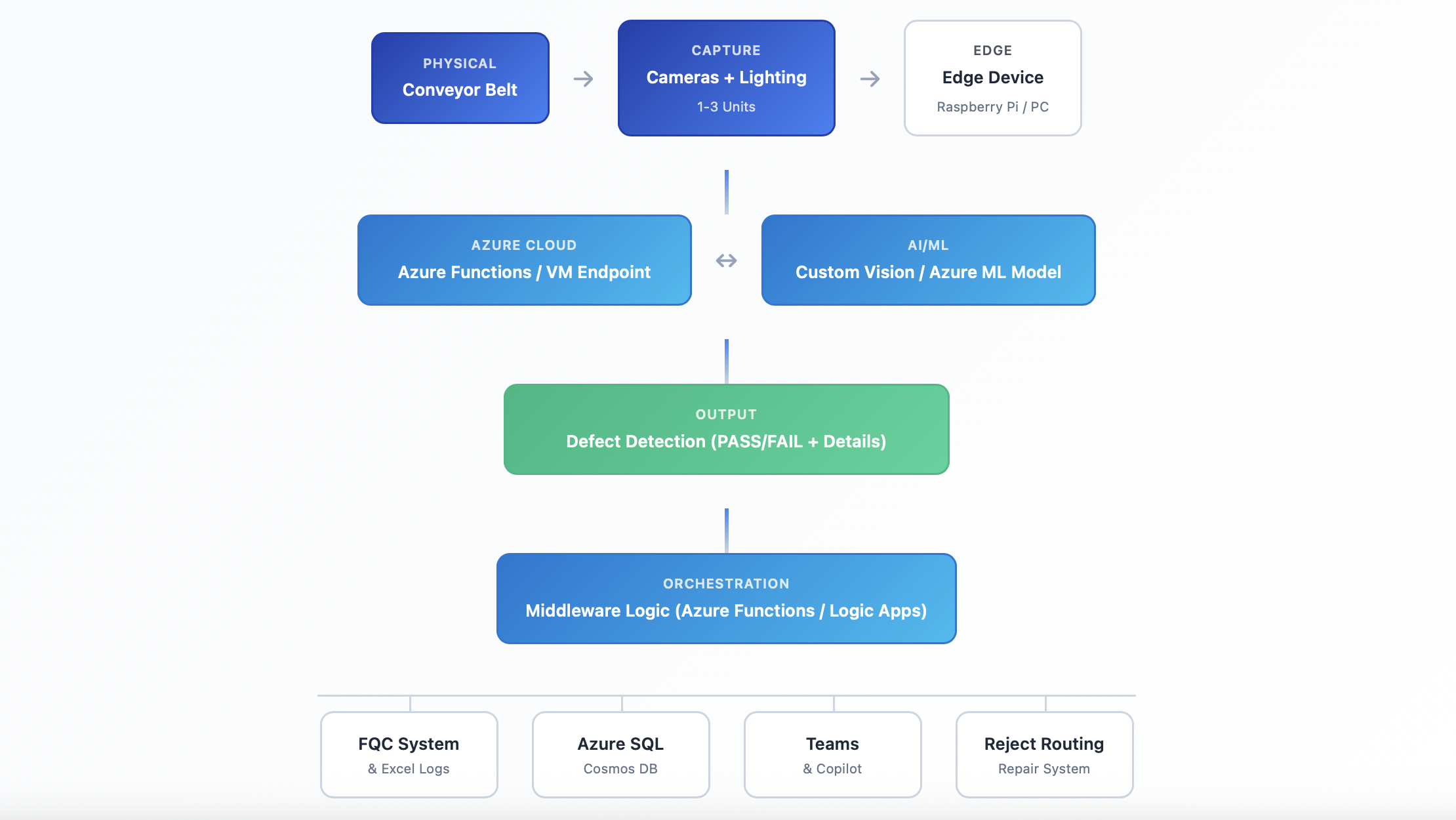
One of the biggest gaps in AI projects is moving from model → production. We solve that by designing deployable architectures from day one.
Key Components
Edge Layer
- Cameras, lighting, and edge devices for real-time capture
Cloud Layer (Azure)
- Azure Functions for orchestration
- Azure Custom Vision / Azure ML for inference
- Blob Storage for ingestion
- SQL + Power BI for analytics
Orchestration Layer
- PASS/FAIL decisioning
- Notifications (Teams / QC systems)
- ERP / MES integration
Rapid Model Development That Actually Delivers
We don’t overcomplicate model development — we operationalize it.
- ~200 labeled images per defect type
- Rapid training with Azure Custom Vision
- 85–95% accuracy early, improving over time
Optimized for:
- High precision
- High recall
- Sub-second inference
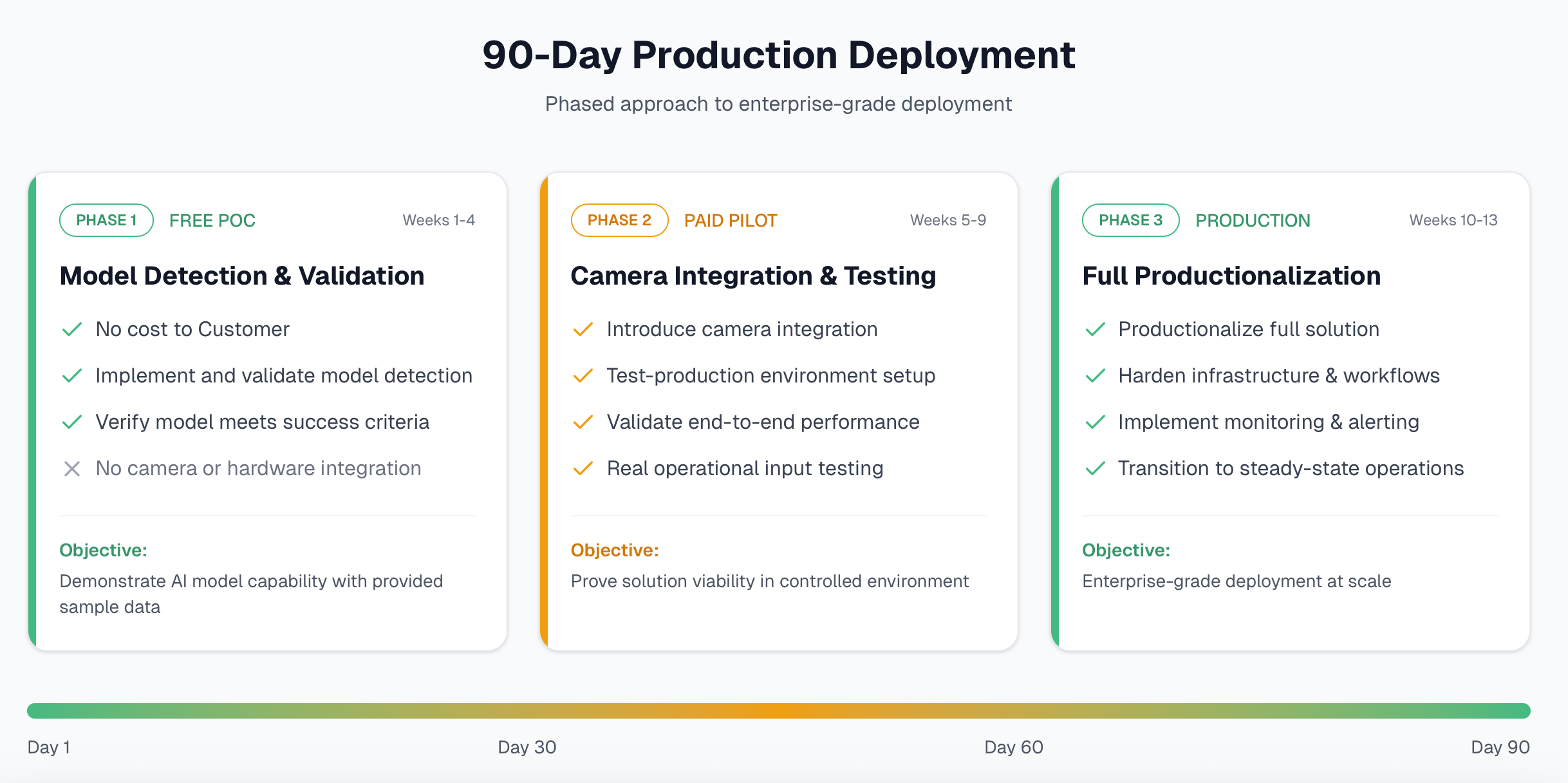
The 90-Day POC: From Idea to Production Path
This is where PRR differentiates — delivering real value in a structured, outcome-driven timeline.
Phase Breakdown
Phase 1: Model Detection & Validation (Free POC)
- Define defect classes
- Train models
- Validate accuracy
Phase 2: Camera Integration & Testing (Paid Pilot)
- Deploy cameras
- Test in real-world conditions
- Validate end-to-end performance
Phase 3: Productionization
- Scale infrastructure
- Integrate enterprise systems
- Transition to steady-state operations
Measurable Business Impact
This isn’t just a technical exercise — it drives real outcomes.
Key Outcomes
- 20–30% reduction in cosmetic defects
- Real-time visibility into quality metrics
- Automated QC workflows
- Scalable across production lines
Most importantly: A system that continuously improves over time.
Why This Matters
Manufacturing leaders are under pressure to:
- Improve quality without increasing headcount
- Reduce waste and rework
- Modernize legacy systems
- Drive measurable ROI from AI
Most AI initiatives fail because they are:
- Too abstract
- Too slow
- Too disconnected from operations
We take the opposite approach:
Focused use cases. Fixed scope. Fast delivery. Production-ready from day one.
The Bigger Opportunity
Once deployed, this foundation expands into:
- Predictive maintenance
- Process optimization
- Supply chain visibility
- Autonomous quality systems
Final Thought
AI in manufacturing doesn’t need to be a multi-year transformation to start delivering value.
With the right approach, it can be:
Designed, deployed, and delivering impact in 90 days.
That’s how we build at PRR.