Who The Helper Foundation is
The H.E.L.P.E.R. Foundation began in 1999 as Venice 2000, founded to provide gang intervention and prevention services in Los Angeles. Under the leadership of co-founder and Executive Director Stan Muhammad, it has grown into a multi-service, multi-ethnic community intervention agency focused on reducing violence, with roots in Venice and Mar Vista and a growing presence in the Antelope Valley.
Helper describes its mission as being a bridge between people with common needs, pooling resources across ethnic, racial, and cultural lines to help young people and community members move toward positive, value-centered lives. The City of Los Angeles has funded Helper's violence prevention and intervention work since 1999.
Its work spans:
- Community Violence Intervention (CVI): crisis intervention, counseling, gang intervention, conflict resolution, and anger management for people affected by violence.
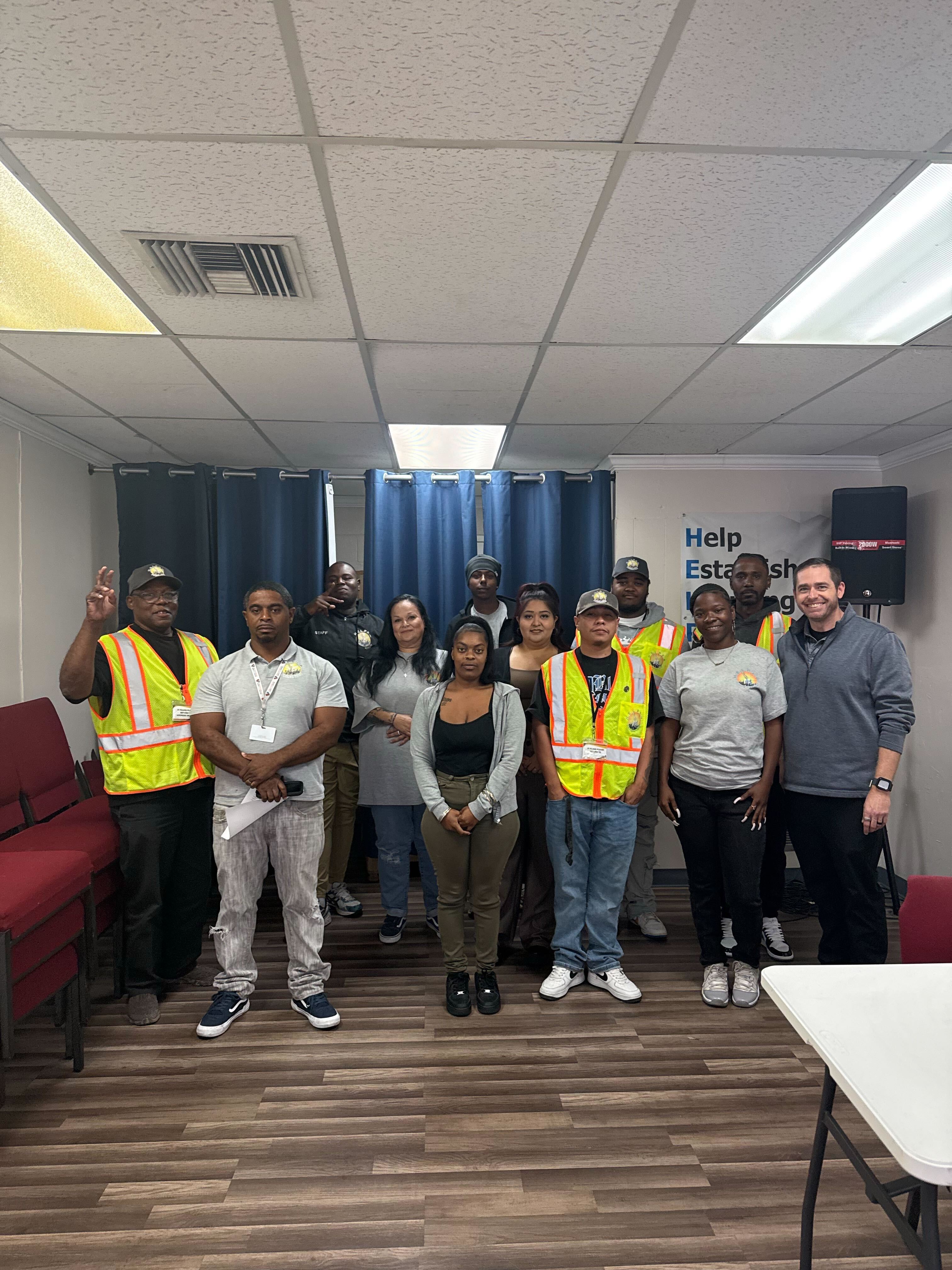
- Safe Passage: trained staff who keep students safe traveling to and from school, across Los Angeles neighborhoods and for the Eastside Union School District in the Antelope Valley.
- School-based prevention: weekly sessions in Antelope Valley schools that teach structure and life skills, reaching more than 2,500 students.
- Youth development: work with 10- to 15-year-olds through the City of Los Angeles' Gang Reduction and Youth Development (GRYD) program since 2007.
- Mentoring, workforce, and community care: counseling, leadership training, tutoring, job training, arts programs, and food distribution for seniors and families.
The challenge: frontline work, paper-based data
Violence intervention happens fast and in the field. An interventionist might de-escalate a conflict, check in with a young person's family, and connect someone to services, all before lunch. Safe Passage staff are on routes and at school gates, not at desks.
That reality has historically made data hard to capture. Notes end up in notebooks. Updates live in text messages. And when it's time to report to funders and public partners, staff have to reconstruct months of work by hand. For an organization funded by city and state grants, that is more than an inconvenience. It takes time away from the people Helper exists to serve, and it makes the impact of the work harder to see.
The solution: one system from the sidewalk to the grant report
PRR runs the technology behind Helper's frontline programs, with Clarity serving as the case management system at the center. Instead of separate tools for each program, Helper's teams work in one place:
- Safe Passage support. Staff on routes and at schools have a single place to work, and leadership has visibility into activity across sites.
- CVI casework. Interventionists track intakes, contacts, services, and outcomes for high-risk participants over time, building a continuous record instead of scattered notes.
- Grant reporting built in. Reports come straight from the data staff already enter during their daily work, so reporting no longer means a scramble at the end of every grant cycle.
- Two sites, one platform. Los Angeles and the Antelope Valley each run their own staff and reports, while leadership keeps one organization-wide view.
Built for partnership with cities and police
In the Antelope Valley, Helper serves as the violence intervention partner to the City of Lancaster under California's CalVIP (California Violence Intervention and Prevention) grant, working alongside the Lancaster Police Department. Clarity is the case management system behind that work, supporting implementation, staff training, and grant-cycle reporting.
Partnerships like this depend on shared, accountable outcomes. Community-led organizations bring the relationships and credibility; public partners need reliable information about what is happening and what is working. A modern case management system helps both sides work from the same picture.
What's next: the H.E.L.P.E.R. Program on Clarity LMS
Helper's life-skills curriculum, the H.E.L.P.E.R. Program, is built on the Amer-I-Can foundation and is being adapted into Helper's own program. PRR is now helping bring that curriculum onto the Clarity Learning Management System, so Helper can deliver it consistently, track participation and progress, and scale it to more young people.
Why it matters
Clarity was designed for social-service organizations, and Helper shows it works at street level too, in some of the most demanding environments for data collection, and under the reporting requirements that come with public grants and city partnerships.
More importantly, it reflects something we believe at PRR: the organizations closest to the problem deserve tools as serious as their work. Helper has spent more than 25 years earning the trust of its community. Our job is to make sure that trust is backed by infrastructure that lets its people spend less time on paperwork and more time where they're needed most.
Learn more
To learn more about The Helper Foundation and its programs, visit www.helperfoundation.org.
To learn how Clarity can support your organization's frontline, case management, or grant-funded work, contact boomer@theprrgroup.com.